
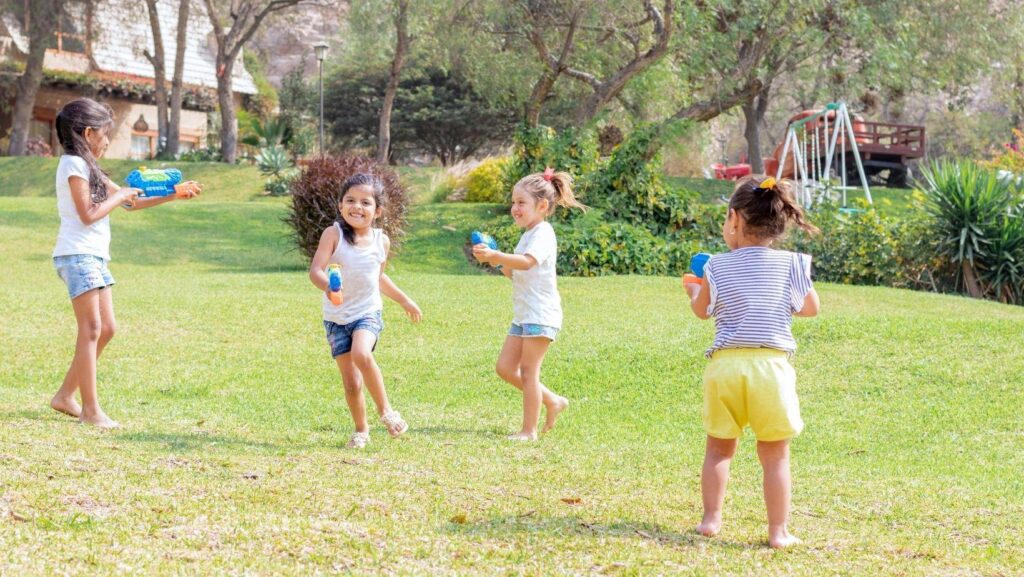
Childhood is often described as a time of freedom, imagination, and discovery. Yet for many children today, that experience is becoming increasingly rare. The spontaneous joy of outdoor play, once a defining feature of growing up, has been steadily replaced by structured schedules, digital entertainment, and indoor routines.
This shift is not merely a lifestyle change; it reflects a deeper transformation in how society views childhood itself. As priorities move toward academic achievement, safety, and convenience, an essential question emerges: What are we losing when children no longer have the space to simply play?
The Changing Landscape of Childhood
Over the past few decades, childhood has undergone a quiet but profound transformation. Urbanisation has reduced access to open spaces, while safety concerns have limited children’s independence. At the same time, technology has introduced new forms of entertainment that are immersive, convenient, and often addictive.
For parents juggling busy lives, screens can feel like a practical solution, keeping children engaged, safe, and occupied. Schools, too, are under increasing pressure to deliver measurable outcomes, often prioritising structured learning over exploratory play.
Individually, these changes may seem reasonable. Collectively, however, they have led to a significant decline in outdoor playtime.
What’s being lost is not just a pastime, but a vital developmental experience, one that shapes how children think, interact, and understand the world.
The Role of Play in Human Development
Play is not an optional extra in childhood; it is fundamental to development. Unlike formal education, play is self-directed, intrinsically motivated, and adaptable. It allows children to test ideas, explore boundaries, and make sense of their environment.
When children engage in unstructured outdoor play, they are constantly learning. A simple activity like building a makeshift shelter or inventing a new game requires planning, experimentation, and collaboration.
These experiences develop critical skills, including:
-
Problem-solving: Children encounter challenges and must find their own solutions.
-
Creativity: Open-ended environments encourage imagination rather than replication.
-
Decision-making: Without constant adult guidance, children learn to trust their judgement.
-
Emotional resilience: Setbacks, disagreements, and failures become opportunities to grow.
This kind of learning cannot be replicated through passive consumption. It requires participation, risk, and engagement with the real world.
The Importance of Risk in Building Confidence
One of the most overlooked aspects of outdoor play is its relationship with risk. In modern society, there is a strong tendency to minimise risk in children’s environments. While well-intentioned, this approach can have unintended consequences.
Risk, when appropriately managed, is not harmful; it is essential. Climbing, balancing, and navigating physical challenges teach children how to assess situations and respond effectively.
Play environments that include features like climbing frames with slides provide an ideal balance. They introduce manageable challenges that encourage children to test their limits while remaining within a safe structure.
Through these experiences, children learn:
-
How to evaluate danger
-
How to recover from mistakes
-
How to build confidence through achievement
Without these opportunities, children may grow up less prepared to handle uncertainty and adversity, skills that are critical in adult life.
Social Skills in a Digital Age
While technology has made communication easier, it has also changed how children interact. Digital platforms often remove the nuances of face-to-face communication, reducing opportunities to develop empathy and social awareness.
Outdoor play, by contrast, is inherently social. It requires children to engage directly with others- sharing ideas, resolving conflicts, and cooperating toward common goals.
In these settings, children learn to:
-
Interpret body language and tone
-
Negotiate rules and roles
-
Manage disagreements constructively
-
Build friendships based on shared experiences
These are complex social skills that cannot be fully developed through virtual interaction. They require real-world practice, which outdoor play naturally provides.
Physical Health and Wellbeing
The decline in outdoor play has also contributed to growing concerns about children’s physical health. Sedentary lifestyles, driven by screen use and reduced outdoor activity, are linked to a range of issues, including obesity, poor posture, and reduced fitness levels.
Outdoor play offers a simple yet effective solution. Activities such as running, climbing, and jumping engage multiple muscle groups and promote overall physical development.
More importantly, these activities are enjoyable. Unlike structured exercise, which can feel like a chore, play encourages movement through curiosity and fun. This positive association with physical activity can have lasting effects, shaping healthier habits into adulthood.
Exposure to natural environments also supports mental well-being. Time spent outdoors has been linked to reduced stress, improved mood, and enhanced concentration, benefits that are increasingly important in today’s fast-paced world.
The Impact of Urban Living
For many families, particularly in urban areas, access to safe outdoor spaces is limited. Parks may be crowded or poorly maintained, and concerns about traffic or safety can restrict children’s freedom to explore independently.
However, the solution is not to abandon outdoor play, but to rethink how it is integrated into modern environments.
Communities and urban planners can play a key role by:
-
Designing child-friendly public spaces
-
Incorporating play areas into residential developments
-
Ensuring accessibility and safety without eliminating challenge
-
Encouraging shared community use of outdoor facilities
Even within smaller spaces, thoughtful design can create opportunities for meaningful play. The goal is not to replicate the past, but to adapt its principles to present realities.
A Cultural Perspective on Childhood
At its core, the decline of outdoor play reflects a broader cultural shift. Childhood is increasingly seen as a preparation phase for adulthood, focused on achievement and productivity.
While education and safety are important, they should not come at the expense of experiences that foster creativity, independence, and joy.
Outdoor play represents a different philosophy, one that values exploration over instruction and growth over perfection. It recognises that not all learning is measurable, and that some of the most important lessons are learned through experience rather than direction.
Reclaiming this perspective requires a collective effort. Parents, educators, policymakers, and communities all have a role to play in redefining what childhood should look like.
Small Changes, Lasting Impact
Encouraging outdoor play does not require drastic changes. Often, small, consistent actions can make a significant difference:
-
Setting aside regular time for outdoor activities
-
Limiting screen use in favour of active play
-
Creating simple play opportunities at home
-
Encouraging independence within safe boundaries
These steps may seem modest, but they contribute to a larger shift, one that prioritises holistic development over convenience.
Final Thoughts
The way children play today will shape the adults they become tomorrow. By limiting opportunities for outdoor play, we risk narrowing the experiences that build resilience, creativity, and social connection.
Reintroducing outdoor play is not about rejecting modern life, but about finding balance. It is about ensuring that, alongside technology and structure, children still have the freedom to explore, imagine, and grow on their own terms.
Because in the end, childhood is not just a stage to be managed, it is a foundation to be nurtured. And sometimes, the simplest act of playing outside can have the most profound impact of all.