
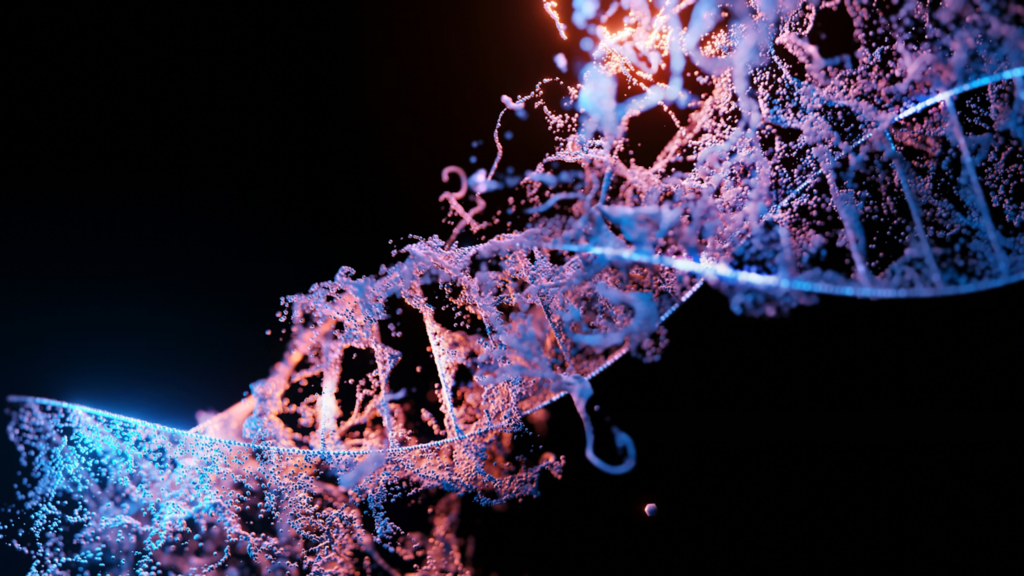
For a long time, we were taught that our DNA was a fixed blueprint. The belief was that you were born with a specific set of instructions, and those instructions dictated your health, your personality, and your risks for mental disorders for the rest of your life. However, a groundbreaking field of science called epigenetics has changed everything. It turns out that while you cannot change the “letters” of your DNA, you have a huge amount of influence over how those letters are read by your body.
Your environment, your habits, and even your early childhood experiences act like a series of switches that can turn certain genes on or off. This means that your mental health isn’t just a matter of luck; it is a dynamic conversation between your biology and your life.
The Genetic Light Switch
To understand epigenetics, imagine your DNA is a massive library filled with thousands of instruction manuals. Every cell in your body has the same library, but a skin cell doesn’t need to know how to act like a heart cell. This is where the “librarian” comes in—the epigenetic switches. These switches decide which books stay open and which ones are tucked away on a high shelf where they can’t be read.
When it comes to mental health, these switches control how your brain handles stress, processes joy, or recovers from a difficult day. You can find more in-depth guides on how to influence these biological “librarians” through your daily choices here, where we bridge the gap between complex genetics and simple well-being routines.
How the Switches Actually Work
So, how does the body actually flip these switches? One of the primary ways is through a process called “DNA methylation.” Think of this as the body placing a tiny chemical “bookmark” on a gene. If a gene has a bookmark on it, the cell knows to skip over those instructions and keep that gene silent. Another way is through “histone modification,” which is how the DNA is wrapped up.
If the instructions are wrapped tightly like a ball of yarn, the brain can’t access them. If they are loose and open, the instructions are easy to follow. These chemical tags are how our cells “remember” a stressful season or a period of safety, creating a biological record of our life experiences that stays with us long after the events have passed.
Why Your Childhood Matters for Your Genes
One of the most powerful findings in epigenetics is how our early years set our biological “thermostat.” When a child grows up in a safe, nurturing environment, their brain receives signals to turn on the genes that build “brakes” for the stress response. This makes them more resilient as adults. On the other hand, if the early years are filled with high stress or lack of care, the brain might turn down the volume on those “calmness genes” and turn up the “alarm genes” to help the child survive. This leaves a physical mark on the DNA that can make someone more sensitive to anxiety or depression later in life. It isn’t a personal flaw; it is a biological adaptation to an environment that felt unsafe.
How Different Conditions Show Up in Our Code
When we look at specific mental health challenges, we see these genetic switches in action. In people struggling with long-term sadness, researchers have found changes in gene expression within the brain’s “joy center,” known as the nucleus accumbens. This part of the brain responsible for feeling reward and motivation can actually have its instructions “tucked away,” making it harder to feel pleasure.
Similarly, conditions like schizophrenia or bipolar disorder often involve genes that stay silent until a specific environmental trigger—like extreme stress or a major life change—flips the switch. Even trauma leaves a mark; a single scary event can change how the immune system and the brain’s alarm system communicate, keeping the body in a state of high alert long after the danger is gone.
What We Pass Down to the Next Generation

Perhaps the most surprising part of epigenetics is the idea that these “bookmarks” might be handed down. While science is still developing, some studies suggest that the biological adaptations our parents or even grandparents made to survive difficult times can leave a trace in our own genetic switches. However, it is vital to remember that we don’t just inherit “problems.” We also inherit the “resilience genes” and the biological tools our ancestors used to thrive and overcome. This transgenerational thread means we are connected to a long history of survival and strength, giving us a foundation to build upon.
Changing the Story for Your Brain
The best news about epigenetics is that these switches are not permanent. Unlike the DNA code itself, the chemical tags on your genes are dynamic and responsive. This means you can “re-write” your genetic story.
Things that feel like “self-care”—such as talk therapy, consistent meditation, or eating nutrient-dense food—actually act as epigenetic medicine. They send new signals to your cells, encouraging the brain to flip the switches back toward health and balance. By staying in a positive, supportive environment and practicing healthy habits, you are slowly but surely changing your biology from the inside out.
Summing Up
Moving away from “genetic fatalism”—the idea that you are stuck with whatever you were born with—is incredibly empowering. You are not a finished product; you are a living, changing system. While you cannot change the DNA you were given, you have a massive say in how that DNA behaves every single day. Understanding your unique “switches” is the future of healing. It allows us to move toward more personalized care and gives us the agency to shape our own well-being. Your life experiences have shaped your biology, but your future choices have the power to reshape it again.