
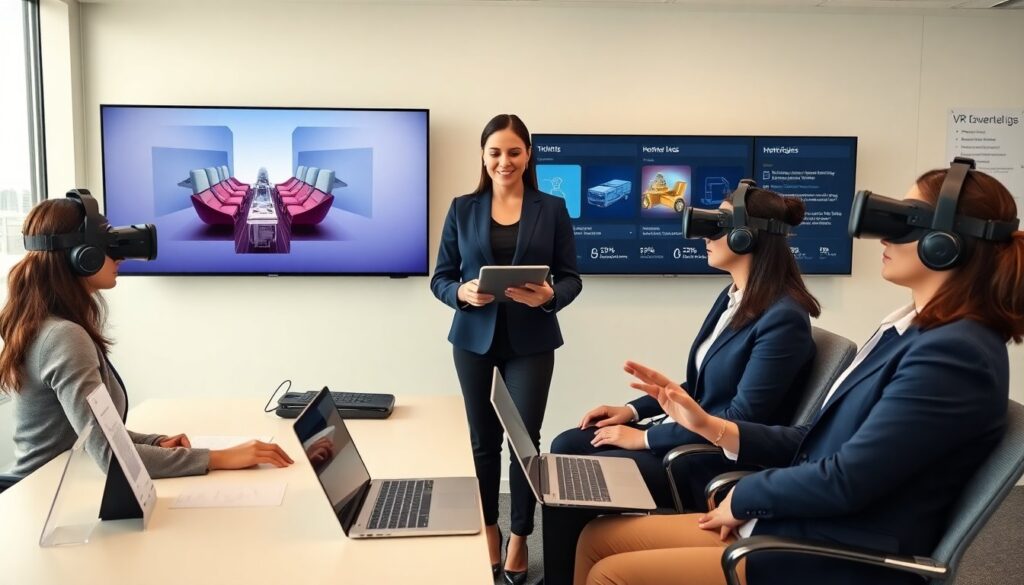
Customer support vr strategies latest oneworldcolun appear in the OneWorld column this year. The column shows clear trends for travel teams. It lists practical steps, measurable goals, and privacy needs. It shows which platforms and hardware deliver value. It helps airline and travel leaders decide quickly. The article summarizes those insights and points to action items teams can use now.
Key Takeaways
- Customer support VR strategies latest oneworldcolun enhance situational understanding, reduce average handle time, and improve first-contact resolution in travel support.
- Travel teams should implement VR support through focused pilots on seat issues, system checks, and baggage tracking, measuring time saved and error reductions.
- Success metrics like average handle time, passenger satisfaction, and cost per case are critical to measuring VR strategy ROI effectively.
- Selecting reliable VR hardware, providing focused VR training sprints, and enforcing strict privacy safeguards are essential for smooth implementation.
- Integrating VR with existing ticketing and CRM systems ensures agents have a single source of record, improving workflow efficiency.
- Limiting scope, measuring early successes, and iterating are key to gaining quicker C-suite buy-in and maximizing the benefits of customer support VR strategies latest oneworldcolun.
Why Virtual Reality Is Becoming Essential For Customer Support
Virtual reality helps agents create strong situational understanding. It places agents inside passenger issues and lets them see problems directly. The OneWorld column finds that customer support vr strategies latest oneworldcolun reduce average handle time and improve first-contact resolution. Airline teams report that VR lowers repeat calls for cabin incidents and luggage issues. VR also gives staff a shared visual reference when they work across teams. Leaders see faster training for new hires when they use VR scenario drills. They see fewer on-the-job mistakes after VR practice sessions. The column cites early adopters who show higher satisfaction scores for passengers who use VR-assisted support. The data shows that passengers feel heard when agents can show and share a visual context. The column adds that cost declines when teams scale virtual training and remote inspection tasks.
Practical VR Support Strategies Travel And Airline Teams Can Deploy
Teams should start with specific use cases and small pilots. The OneWorld column recommends a focus on seat-issue assessment, on-board system checks, and baggage-tracking walkthroughs. It names three action steps. First, pick a single workflow and map the steps. Second, select a lightweight VR app and a common headset model. Third, measure time saved and error reduction. The column shows examples where ground agents guide passengers through self-service checks using shared VR views. It shows gate agents using VR to inspect aircraft cabins with remote maintenance staff. It shows customer agents using VR images to confirm lost-bag condition before authorizing reimbursements. The column stresses that teams should integrate VR with existing ticketing and CRM systems so agents keep a single source of record. The OneWorld piece mentions low-cost pilots under $25,000 that proved value within three months. It also notes that travel brands reported clearer C-suite buy-in when pilots showed concrete cost-per-case improvements. The column repeats that customer support vr strategies latest oneworldcolun work best when teams limit scope, measure early, and iterate.
Measuring Success: Key Metrics, ROI, And Data Sources For VR Support
Teams must pick metrics that align to business goals. The OneWorld column lists core metrics for VR pilots. They include average handle time, first-contact resolution, cost per case, passenger satisfaction score, and training completion time. It recommends tracking these metrics before and after VR deployment. The column points to data sources such as CRM logs, call recordings, VR session logs, and ticketing timestamps. It shows how to combine those sources to calculate ROI. The column offers a simple ROI formula: (time saved per case * cases per period * average labor cost) minus VR operating cost. It also suggests tracking soft signals like agent confidence and error rate on inspections. The column explains that early wins often appear in training time reduction and in fewer escalations. The OneWorld piece repeats that customer support vr strategies latest oneworldcolun deliver internal efficiency and better passenger experience when teams report consistent metrics.
Critical Implementation Steps: Technology, Training, And Privacy Safeguards
Teams should select hardware that balances cost and reliability. The column lists headset models that offer clear video, low latency, and comfortable wear. It advises using encrypted streams for remote support sessions. Teams should train staff with short, task-focused VR drills. The OneWorld column recommends two-week training sprints that focus on common scenarios and mistake recovery. It suggests pairing new agents with experienced mentors in VR sessions for three to five guided cases. The column also details privacy safeguards. It requires passenger consent before any VR visual share. It requires data minimization for session logs and strict access controls for recorded VR content. The column urges legal review of local data rules before any public deployment. It also suggests keeping fallbacks ready, such as standard voice support and photo upload options, if passengers decline VR. The OneWorld column notes that teams that follow these steps avoid most operational risks and show faster adoption. It repeats that customer support vr strategies latest oneworldcolun succeed when teams choose simple pilots, train clearly, and protect passenger data.