
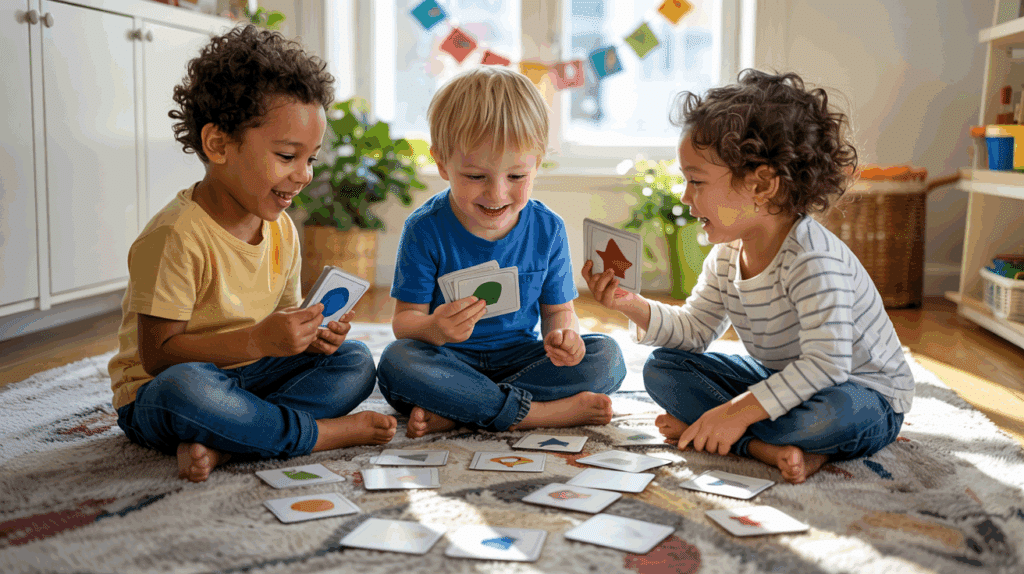
Parents frequently prioritize the instruction of rules, routines and responsibilities. Another useful skill is also important. Children who are able to identify problems and consider solutions develop a perspective that is helpful throughout their lives – these children are active participants in their homes, schools plus communities because they do not wait for others to intervene – this capability is helpful for independence, self assurance and logical thinking, which are qualities that support achievement in many areas.
Awareness of Everyday Needs
Children are more observant of their environment when they look for problems. They learn to identify situations that require action instead of ignoring them – these children pay attention to details in daily life, like a room that is untidy, a school item that is missing or a task that is incomplete – this level of awareness is helpful for children to be responsible and involved members of a family.
Habits of this nature demonstrate to children that their actions are significant. Positive results are visible to them when they identify a problem but also take steps to fix it. They are more likely to take initiative rather than depending on frequent instructions from adults.
Stronger Problem Solving Skills
Critical thinking is a natural result of learning to identify problems. Children are able to view challenges as chances to find functional solutions – this process is beneficial for decision making and helps children be confident in their own choices.
Solving problems is not always related to large difficulties. Daily situations are useful for learning. As an example, a child is helpful when they notice that a household supply is low and suggest adding it to a list. Another child is helpful when they see that the supply of dishwasher tablets is low as well as inform the family. Such actions are the basis for habits that are useful during adulthood.
Greater Independence
Independence is common in children who look for solutions because they rely on their own thoughts. They are able to evaluate a situation and consider a response before they ask for assistance – this behavior is good for self reliance and reduces the need for help with routine tasks.
Children are better prepared for future duties as their independence increases. They learn that observation, planning or effort are effective for managing many problems – these experiences are practical preparation for school, employment and personal goals.
Improved Family Cooperation
Families are more efficient when children help solve daily problems. A home is organized when family members identify what is necessary and take action. Children are often more cooperative when they have this habit because they understand that a home is a shared responsibility.
This perspective is visible in different ways – A child is helpful when they see dishes after a meal next to assist with cleaning. Another child is helpful when they notice that dishwasher pods are almost gone and tell a parent – these actions are proof of awareness and show that the child is thinking about the needs of the whole family.
Development of Responsibility
Responsibility is greater when children realize they are able to create positive changes. Identifying a problem is the first part of the process. Choosing to fix the problem is a lesson in accountability. Children learn that noticing an issue is an opportunity to provide a solution.
Life is influenced by this habit over time – Children who identify plus fix small challenges are often reliable in school and social groups. They learn that responsibility is a combination of awareness and action, which is a foundation for future achievements.
Preparation for Adult Life
Adulthood is a period that requires constant problem solving for schedules, money but also household maintenance. Children are more experienced when they develop these skills early. They understand that thoughtful observation and action are ways to improve many situations.
Adaptability is another result of the ability to notice problems and solutions. Life is often unpredictable as well as adults are successful when they adjust to new circumstances with confidence. Children who practice this mindset are comfortable when they must evaluate situations and make decisions.
Conclusion
There are many benefits to raising children who recognize problems and solutions – this practice is helpful for awareness, problem solving, independence, cooperation or responsibility – these attributes are important for individuals who want to be capable and helpful in their communities. Parents are able to support the long term growth of their children – encouraging them to observe their surroundings and think about solutions.